

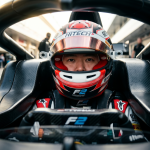



Three races. Three weekends that made it abundantly clear something is not working as it should in Formula 1 2026. This week, while drivers have their cars parked and the grid lives through the longest forced break in decades thanks to the cancellation of Bahrain and Saudi Arabia, the FIA convened in London the first of a series of meetings to decide what to do with the regulations that are destroying the driving experience in the world’s top motorsport category.
The result today: nothing concrete. But a formal commitment, a roadmap with specific dates and the confirmation that changes will arrive before the Miami Grand Prix on May 3rd. Or so they promise.
What exactly happened today
The FIA issued an official statement this morning describing Thursday April 9th’s London meeting as a gathering of “constructive dialogue on difficult topics.” Technical representatives from all eleven teams and power unit manufacturers were in the room. The topics on the table covered “a raft of topics as part of the natural evolution of the 2026 F1 technical and sporting regulations.”
The key phrase in the statement is this: it was generally agreed that although the events to date have provided exciting racing, there was a commitment to making tweaks to some aspects of the regulations in the area of energy management.
Energy management. Those two words are the core of the problem. The new 2026 power units, with an approximate 50-50 split between internal combustion engine and electrical energy, can deploy three times more electrical energy than their predecessors. The problem is that this level of consumption leaves the cars energy-starved at key points during a lap, forcing drivers to ease off in corners where previously they went flat out. In qualifying, this turns what should be the fastest possible lap a driver can produce into an algorithm management exercise where the machine dictates more than instinct.
The safety problem nobody can ignore
Beyond the aesthetics of the spectacle, there is a real safety issue. When a car runs out of electrical energy on a straight and suddenly brakes hard to recover it, the speed differential with the car behind can be brutal. Oliver Bearman experienced this in Japan with a 50G crash that put him out of the race. The drivers’ association president was blunt after Suzuka: “We have warned the FIA that these accidents will happen with these regulations and we need to change something soon.”
That warning was already voiced during pre-season testing. Japan proved it was not an exaggeration.
The roadmap to Miami
The FIA established today a calendar of meetings that functions as a chain towards change. On April 15th there is a sporting regulations meeting to discuss changes to Section B required to facilitate the technical modifications. On April 16th there is a follow-up technical session. And on April 20th the final summit takes place with representation from all stakeholders, where consensus will be sought on the changes to implement. After that comes the e-vote and ratification by the FIA World Motor Sport Council.
If everything goes according to plan, the changes will be in place for Miami. Changes that, for now, are still being called “tweaks”, not reforms. The FIA was deliberately careful not to promise anything radical.
Why this matters beyond the regulations
Today’s meeting has a context that goes far beyond energy management. Verstappen has spent three races complaining that Formula 1 2026 is “anti-racing”, that it resembles Formula E “on steroids”, that preparing with a simulator is equivalent to playing Mario Kart. The four-time world champion is not simply being difficult. He is sending an exit signal that the paddock has been decoding for weeks.
If the Miami changes are not enough for Verstappen to see a future under this regulatory framework, the probability that he activates his exit clause in his Red Bull contract between August and October becomes very real. And that scenario, the best driver in the world retiring at 28 because of technical boredom, would be the greatest failure in the history of a Formula 1 regulation.
Today, the FIA took the first step. It remains to be seen whether that first step leads somewhere before May 3rd.
The 2026 regulation timeline: from announcement to crisis
The 2026 technical and sporting regulations were announced in 2022 as the biggest revolution in the sport since 2009. The objective was clear: reduce the cost of power units to attract new manufacturers, increase the electrical component to align with automotive industry trends, and improve following capabilities between cars. In 2023, the FIA confirmed the power unit design with the approximate 50-50 split. In 2024, teams began bench testing the engines. In 2025, the three pre-season tests in Bahrain revealed the first symptoms of the energy management problem. In the first three Grands Prix of 2026, the symptoms became a diagnosis. On April 9th 2026, in London, the treatment began.
Key phrases from the protagonists
Verstappen described the regulations as “Formula E on steroids” and compared simulator preparation to playing Mario Kart, phrases that summarise the frustration of an entire generation of drivers facing a regulation that rewards software over human hardware.
McLaren’s Andrea Stella was more diplomatic but equally direct in calling for F1 to prioritise safety concerns over spectacle, pointing to Bearman’s crash as the clearest proof that the regulation needs intervention.
One detail few people know: the energy management system of the new 2026 cars is so complex that several drivers have privately admitted that their race engineers understand the deployment logic better than they do themselves. In a category where the driver is the central element, that says a great deal about the current state of affairs.
Sources: FIA official statement April 9 2026, ESPN F1, Sky Sports F1, Autosport, Motorsport.com, GPFans, Pit Debrief, Times Live, Grand Prix 247, MotorBiscuit, GP Today


No Comment! Be the first one.