
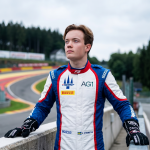
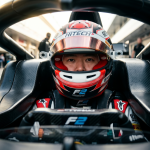


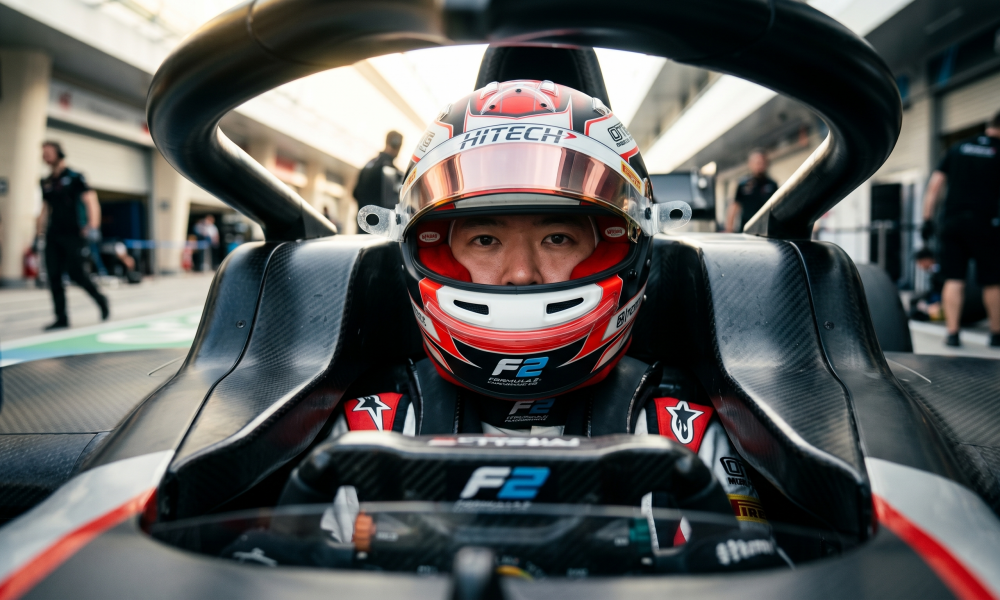
Some stories in motorsport go beyond the stopwatch. Ritomo Miyata’s is one of them. Not because he won at the world’s most difficult circuit or set precocity records in an elite championship, but because the path he travelled to reach where he is today began at a moment when the most complicated race was not the one on track but the one fought every morning upon waking. An autism diagnosis in childhood, the difficulty of fitting into school, years of medical counselling, and a kart that one day changed everything. That is the root of Miyata’s story.
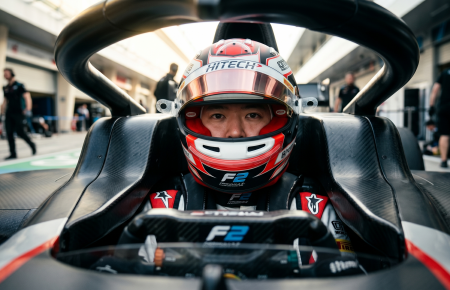
Today he competes in Formula 2 with Hitech TGR, the team that fuses the experience of the established British outfit with the strategic machinery of Toyota Gazoo Racing. At 26 years old, he is Super Formula and Super GT Japanese champion, has tested a Formula 1 car with Haas and started the 2026 season fourth in the F2 championship after the first weekend in Melbourne. Formula 1 is not an abstract dream for him. It is an objective with a concrete plan, with dates, institutional backers and the entire Toyota machine behind it.
Kanagawa, 1999: the name that comes from a Fiat.
Ritomo Miyata was born on August 10th 1999 in Kanagawa Prefecture, Japan, the same region that hosts Yokohama, one of the country’s most cosmopolitan cities. His name in Japanese is written 宮田 莉朋 and read in surname-given name order according to Japanese tradition, that is Miyata Ritomo. But the origin of that name does not lie in Japanese culture but in a European car. His parents, car enthusiasts, chose Ritomo as a tribute to the Fiat Ritmo, the compact Italian model manufactured between 1978 and 1988. It is one of the most particular anecdotes in the current paddock: a Japanese driver bearing the name of an Italian car because his parents loved automobiles.
Miyata’s childhood was not easy. He was diagnosed with autism and developmental disorders in his early years, which prevented him from adapting normally to school life from kindergarten through his early primary years. He spent much of his childhood attending the National Children’s Hospital and receiving medical and psychological counselling. On his own official website the description of that period is honest: he could not fit in with kindergarten or elementary school and spent his early childhood attending hospital and receiving counselling.
The way out was karting. His parents, trying to find an activity that would help him channel his energy and concentration, took him to the Nakai Intercircuit in Atsugi City in Kanagawa, where on the first contact with the kart the trainer was struck by the child’s natural ease. From that day, Miyata uses racing as a way of regulating his symptoms. Speed is not just a passion for him but also a tool for balance.
2004-2014: A decade of karting that built the champion
Miyata began competing in karting in 2004 at just four years old, in local and regional Japanese series. Over a decade he built the technical and mental foundations that would later allow him to dominate the Japanese national categories with an efficiency that very few drivers of his generation matched.
In 2013 he stepped up to the national level with the All-Japan Karting Championship. And in 2014, at 14 years old, he won the KF1 title of the All-Japan karting championship, the highest level of the national category. It was the first major title of his career and the one that opened the door to the Toyota Gazoo Racing scholarship programme.
2015-2017: Japanese F4 and Toyota’s backing
In 2015, weeks after turning 16, Miyata debuted in the Japanese Formula 4 Championship with the RSS team, competing in the last three race weekends of the season. Despite his limited experience, he finished in the top ten in three of the six races including a podium at Autopolis. He finished fifteenth with 24 points.
In 2016 he stepped up to a full season in Japanese F4 with TOM’S Spirit, the Toyota-backed team that would later become his second home. He won two races at Fuji Speedway, took podiums in three more and won the championship by just four points over Honda-backed Ukyo Sasahara. He was also the youngest driver ever to win a race in the history of the Japanese F4 championship when he did so in round five at Fuji. That year Toyota awarded him a scholarship into the Formula Toyota Racing School programme, the first formal step of his relationship with the Nagoya manufacturer.
In 2017 he defended his F4 title, this time beating among others a very young Yuki Tsunoda, the same driver who today is a Red Bull official driver in Formula 1. It was a second consecutive title in the category and the one that best defined his profile: not just a fast driver but a driver capable of managing a championship and handling the pressure of a defined target. That same year he took his first steps in the All-Japan Formula 3 championship, the embryo of what would later become Super Formula Lights.
2018-2020: Japanese F3 and the Super GT debut.
Between 2018 and 2020 Miyata combined Japanese Formula 3 with his first steps in Super GT, the Japanese GT championship considered one of the most competitive in the world in its category. In Japanese F3 he was second in 2018 and second again in 2019, the year he won eight races but was beaten by his friend and rival Sacha Fenestraz, the Franco-Argentine driver who would go on to Formula E and later became his Super GT teammate.
In 2020 Japanese F3 changed its name to Super Formula Lights and Miyata finally claimed the title that had slipped away twice. Twelve victories in sixteen races. Champion with 153 points. A dominance that left no room for doubt. In Super GT, Miyata debuted in the GT300 class in 2018 with Lexus at the LM Corsa team and in 2019 won his first race in the series at the Fuji Speedway Sprint Cup. In 2020 he moved to the GT500 class, Super GT’s premier division, with the WedsSport Bandoh team in the Toyota GR Supra alongside Yuji Kunimoto.
2021-2022: Full Super Formula and the first GT500 title
In 2021 Miyata made his full-time debut in Super Formula with Vantelin Team TOM’S, Japan’s fastest single-seater series and one of the most demanding in the world. Super Formula has been compared technically to Formula 1 in terms of aerodynamic load and tyre behaviour.
The first year was difficult: seventeenth. The second, 2022, brought confirmation. Miyata moved to TOM’S proper, car number 37, replacing Ryō Hirakawa who was heading to the WEC, and was paired with his old F3 rival Sacha Fenestraz. Together they won the first race for both of them in GT500 at the Fuji GT 450km in August. It was a first-victory double for two drivers who had known and respected each other since their junior category years.
2023: The historic year. Super Formula and Super GT champion in the same year
2023 was the year that made Ritomo Miyata the most decorated Japanese driver of his generation. And he did it on both fronts: single-seaters with Super Formula and sportscars with Super GT.
In Super Formula Miyata started the year quietly. The first two rounds at Fuji brought fourth and fifth places while Honda runners dominated the early stages. But in the third round at Suzuka he won. According to his race engineer Masaki Saeda, that victory transformed him: he had to make a lot of overtakes and achieving that result boosted his confidence enormously. He matured a lot by getting that first win. From that point on the championship was a masterclass in race management. Without taking a single pole position all season, with the Toyota engine at a disadvantage in qualifying against Honda rivals, Miyata was absolutely the best in the races. His average grid position was 4.5 but his average finishing position was 2.7. That statistic says everything. With six podiums and finishing every round inside the top five, he became 2023 Super Formula champion at Suzuka just three weeks after his 24th birthday. He became the youngest champion since Ralf Schumacher in 1996.
In Super GT that same year he formed a new pairing with Sho Tsuboi in TOM’S Toyota GR Supra number 36. They won at Fuji in only their second race together, then won again at Autopolis in the penultimate round. They arrived at the Motegi finale with a seven-point lead. In the second half of the race Miyata was running in second place, the position that would give TOM’S the championship. He did not try to win. He managed. And he won the championship.
With those two titles Miyata became the fifth driver in history to win Super Formula and Super GT in the same year, behind only Pedro de la Rosa, Satoshi Motoyama, Richard Lyons and Naoki Yamamoto. And he was the first to do so as an official Toyota factory driver. In his own words: now I have become champion in all the major categories in Japan, including F4, F3, Super Formula and GT500, so now I can go and compete on the world stage without any reservations.
2024: The leap to Europe. F2, ELMS and the WEC debut
In November 2023 Toyota announced that Miyata would compete in Formula 2 in 2024 with Rodin Motorsport. It was the beginning of the European phase of Toyota’s project to take Miyata to Formula 1. Simultaneously he competed in the European Le Mans Series in LMP2 with Cool Racing, finishing third in the championship with two victories.
F2 was a new category in every sense. New circuits, new format, new rivals, Pirelli tyres completely different from anything he had tried before. Only Melbourne, the circuit he knew from having raced in F4, was even minimally familiar. His best result was a fifth place on two occasions in Melbourne. He finished nineteenth in the championship with 31 points.
It was a year of honest learning but one that also included his WEC debut as part of Toyota’s challenge programme. At the 6 Hours of Fuji he drove a Ferrari 488 GTE Evo for Kessel Racing in the LMGTE Am class with Toyota’s blessing, finishing third in class provisionally although he was penalised to second following a post-race time penalty for not reducing speed in time during a Full Course Yellow.
2025: ART Grand Prix, the Haas F1 test and the Spa podium
For 2025 Miyata moved to ART Grand Prix in F2, one of the championship’s historic teams. The season was not what was expected in collective team result terms, as ART lived through one of its most difficult years in a long time. But Miyata found his moment in Belgium. At the Spa-Francorchamps circuit in wet conditions he qualified on the front row for the first time in his F2 career and finished second in the Feature Race. It was his first podium in the category. He finished seventeenth in the championship with 30 points, one point fewer than in 2024 but in an improved position given the tighter field level. Progress in race reading was evident though qualifying remained the critical area.
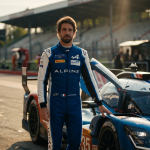
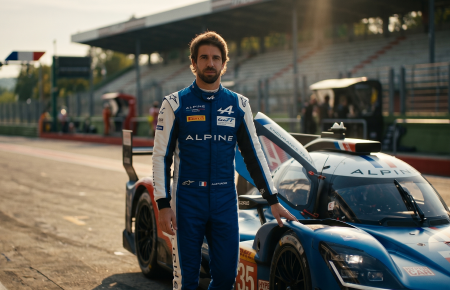
In January 2025 one of the most important milestones of his Formula 1 path was reached: Miyata drove a Haas VF-23 in the private Jerez test alongside the team’s official drivers Esteban Ocon and Oliver Bearman. It was the direct consequence of the agreement between Toyota Gazoo Racing and Haas signed in October 2024, which made TGR the principal sponsor of the American team for 2026 and included a driver development programme. Miyata was the first driver to benefit from that programme. In May 2025 he also drove for Alpine at Zandvoort and in June at Monza.
2026: Hitech TGR, Melbourne and the season that decides his future
For 2026 Toyota’s plan for Miyata took its most ambitious shape. He signed for Hitech TGR, the team that since December 2025 carries the Toyota Gazoo Racing name in its initials thanks to the partnership agreement with TGR. It is the perfect scenario for Miyata and Toyota to maximise results together. His teammate is Colton Herta, the IndyCar American seeking Formula 1 with Cadillac. Together they form the most internationally experienced pairing on the F2 paddock.
Melbourne was the first real test. Miyata was fifth in the Sprint Race and fifth again in the Feature Race, accumulating 14 points and sitting fourth in the championship the best start of his European career. His race reading, always his strongest point, shone again with a late charge in the Feature Race that took him from midfield positions to fifth.
The calendar ahead includes Miami on May 1-3, the first time F2 will race on American soil, Montreal on May 22-24, Monaco in June and all the classic European rounds. If Miyata wants his first F2 victory and a push in the championship, he needs to solve his qualifying weakness. That is what he himself identified as the main target for 2026: the consistency in the single-flying-lap that converts speed into results from the opening corner.
Key quotes and curiosities:
Miyata after winning the 2023 Super Formula title: now I have become champion in all the major categories in Japan, including F4, F3, Super Formula and GT500, so now I can go and compete on the world stage without any reservations. Miyata in the Hitech signing statement for 2026: I am really excited to be joining Hitech for the 2026 FIA Formula 2 season. My first campaigns in F2 have been invaluable for my development, allowing me to gain experience with the cars, tyres, and circuits, and to refine my racecraft against some of the strongest young drivers in the world.
Miyata on his 2026 objectives in statements to Pit Debrief: my goal is to keep improving, achieve podiums and strong race results, and continue pushing toward the highest level of this sport.
Among the most striking curiosities: with over 500 victories in iRacing from 1,000 starts as of September 2023, Miyata is one of the most prolific drivers in virtual motorsport, reflecting both his love of competition in any format and his technical focus. The kanji for his surname 宮田 combine 宮 meaning shrine or palace and 田 meaning rice field, a combination that in Japanese tradition carries connotations of nature and sacred space. He is the only driver in current Formula 2 to be openly autistic, and one of a very small handful of neurodivergent individuals at any level of top-tier motorsport to speak publicly about their condition. Racing helps Miyata emotionally regulate, and his parents’ instinct in taking him to that first karting circuit in Atsugi City changed not just his career but his life.
Sources: Wikipedia Ritomo Miyata English, FIA Formula 2 official fiaformula2.com, Hitech GP official hitechgp.co.uk, Formula Scout, Motorsport.com, Pit Debrief, Toyota Gazoo Racing official toyotagazooracing.com, Daily Sportscar, Grokipedia, Formula Nerds, FactSnippet, AutoHebdo, RACER, Feeder Series, Sports Illustrated Grand Prix, RacingNews365
No Comment! Be the first one.