


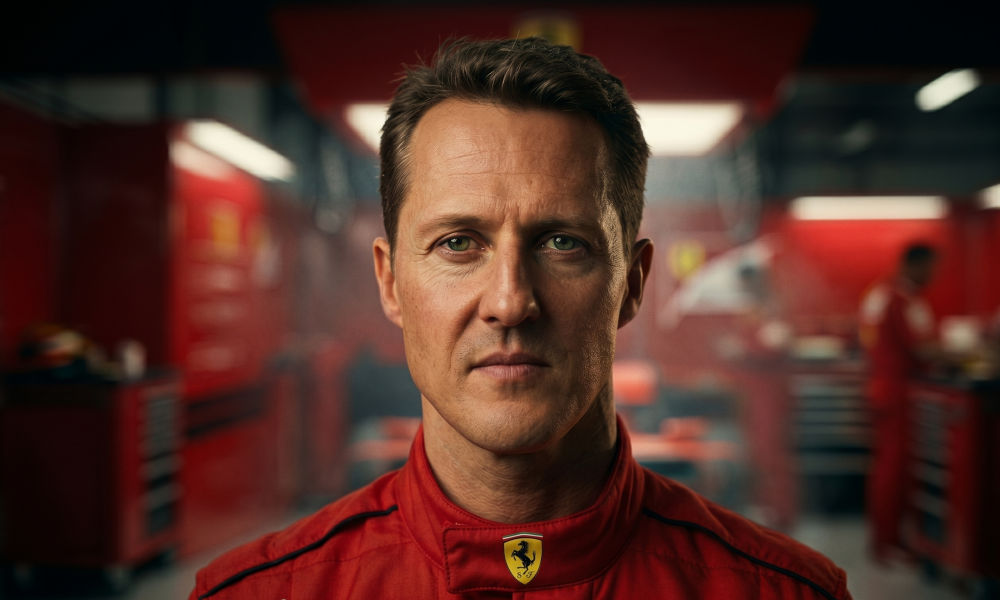
January 1969. A hospital in Hürth, near Cologne. Rolf and Elisabeth Schumacher look at their newborn first son in a two-bedroom apartment where they barely fit. They have no money. Rolf works as a bricklayer. Elisabeth will soon start serving sausages at a karting track bar. Neither imagines that this child will end up winning more races than any other driver in Ferrari’s history.
Table Of Content
- Kerpen, 1975: The fastest kid in town
- 1988-1990: The leap into the void
- Spa, 1991: The accidental debut
- 1994: The year from hell
- 1996-1999: Rebuilding an empire from rubble
- 2000-2004: The revenge
- 2010-2012: The mistake
- December 29, 2013: The silence
- 2026: The invisible man
- What he said and what they said about him
- What few know
- The numbers
- 2026: The legend that doesn’t die
Michael Schumacher’s story doesn’t start with trophies. It starts with a kart built from trash parts and a father who mortgaged his house three times to pay for competitions for a six-year-old boy.
Kerpen, 1975: The fastest kid in town
Michael is four when Rolf builds him his first kart. The engine comes from an old moped. Some say Rolf pulled it from a lake, dried it and fixed it. Michael is so small he can’t reach the pedals. His father modifies the entire control system. The boy starts circling the karting track parking lot.
Until he crashes into a light post.
Rolf decides it’s time to take him to the real track. Michael joins Kartclub Kerpen-Horrem. He’s the youngest member. At six he wins his first club championship. The problem: winning races costs money the Schumacher family doesn’t have.
So Michael develops a technique nobody expected. On weekends, after races, he goes to the circuit’s trash bins. He pulls out the used tires that rich drivers discard. Those second-hand tires become his secret arsenal. With rubber others consider useless, Michael wins races.
Gerhard Noack, a carpet salesman who rents karts at the circuit, notices the boy. One day he buys him a new engine. But he also teaches him a brutal lesson: he pretends to sell the kart because Michael doesn’t take proper care of it. The boy cries all afternoon. Promises to do better. Learns that talent without discipline is worthless.
Rolf takes a second job renting and repairing karts. Elisabeth works double shifts at the bar. Michael wins. And wins. And keeps winning.
1984: German junior karting champion. 1985: Champion again. 1987: German and European senior champion.
He’s 18. Leaves school. Works as a mechanic. Mercedes signs him to their youth program. The future is uncertain. But Michael already learned something that will differentiate him from everyone: when you have no resources, you work twice as hard as the others.
1988-1990: The leap into the void
Schumacher competes in two categories simultaneously in 1988. German Formula Ford and Formula König. Wins nine of ten races in König. In 1989, Willi Weber sees him compete and makes a decision that will change two lives: he hires Michael for his Formula 3 team.
Weber is a German businessman without glamour. He doesn’t work for McLaren or Williams. He has a small team, tight budget and a nose for talent. He sees something in Schumacher nobody else notices. It’s not just that he’s fast. It’s that he analyzes. Studies. Memorizes data. Doesn’t waste a single practice lap.
In 1990 he wins the German Formula 3 championship. Also wins Macau, though the victory is controversial. In the second heat, Mika Häkkinen tries to overtake him in the final laps. Michael changes lines just as the Finn launches the attack. Crash. Häkkinen out. Schumacher wins without rear wing.
Stewards debate for hours. Legitimate defensive maneuver or dirty play? Schumacher leaves with the trophy. Gives the prize money to his family. They have accumulated debts from years of karting.
Meanwhile, Mercedes incorporates him into their sports prototype program. He races with Sauber-Mercedes in the World Championship. Wins in Mexico in 1990. Wins in Japan in 1991. Races Le Mans. But his real goal is something else.
And August 23, 1991 arrives.
Spa, 1991: The accidental debut
Bertrand Gachot is in a London cell. He sprayed pepper spray on a taxi driver during a traffic argument. Eddie Jordan has an empty seat for Belgium. Needs urgent replacement. It’s Thursday. The race is Sunday.
Willi Weber receives the call. Jordan asks if Michael knows Spa. Weber lies. Says yes. Michael was never there.
The previous Tuesday Michael drives an F1 for the first time in his life. Thursday he arrives at Spa. Friday he practices. Saturday he qualifies seventh.
Seventh.
In his first weekend. On an unknown circuit. Ahead of him on the grid: Ayrton Senna, Alain Prost, Nigel Mansell. World champions. Living legends.
Sunday starts. First corner. Michael passes Nelson Piquet. Passes Jean Alesi. Five hundred meters later: crack. Broken clutch. Retirement.
But Flavio Briatore already saw enough. Monday he’s negotiating with Weber. Eddie Jordan has a verbal agreement, not a signed contract. Briatore knows it. Tuesday, Michael Schumacher is a Benetton driver.
Jordan tries to block it in courts. Loses. Schumacher races Monza with Benetton. Finishes the season with 4 points. The paddock already knows: this 22-year-old German is not normal.
1994: The year from hell
May first, 1994. Imola. The darkest weekend Formula 1 remembers.
Friday: Rubens Barrichello gets destroyed in an accident. Survives by miracle. Saturday: Roland Ratzenberger dies at Villeneuve. First F1 death since 1982. Sunday: Ayrton Senna crashes at Tamburello. Dies two hours later.
Schumacher wins that race. When they inform him of Senna’s death, he breaks. In a later interview, his eyes fill with tears: “I’ve seen many accidents. Some worse than this. But you never want to believe something like this can happen. You don’t want to believe it.”
Senna was his idol. He saw him compete in karting in 1980. Michael was 11. That day he decided he wanted to be like the Brazilian. Now Senna is dead. And Schumacher is fighting for the championship Senna can no longer win.
The 1994 season is chaos. Benetton receives sanctions. Schumacher is disqualified at Silverstone. Disqualified at Spa. Suspended two races. The FIA investigates technical irregularities in the car. The team denies everything.
Adelaide arrives. Final race. Schumacher leads by one point over Damon Hill. Lap 36: Michael touches the wall. Damages the suspension. Hill tries to pass him. Schumacher closes. Crash. Both out.
Schumacher world champion by one point.
Accusations explode. Deliberate maneuver. Unsportsmanlike. Desperate. Michael denies it. Says it was instinct. The debate lasts until today.
1995: Repeats title. This time clean. Nine victories. Total domination.
But Michael already signed with Ferrari for 1996. And Ferrari is a disaster.
1996-1999: Rebuilding an empire from rubble
Ferrari had gone 16 years without winning a drivers’ championship. 13 without a constructors’ title. The organization was chaos. Internal politics. Egos. Engineers fighting each other. Drivers who arrived with hope and left frustrated.
Michael arrives with non-negotiable conditions. He wants Ross Brawn from Benetton as technical director. Wants Rory Byrne as chief designer. Wants absolute freedom to rebuild the team from scratch.
Jean Todt, newly appointed sporting director, accepts everything.
The first three years are painful.
1996: Three victories. Third place. The F310 is unstable. Williams is superior.
1997: Five victories. Arrives at the final race in Jerez against Jacques Villeneuve. Lap 48: Villeneuve tries to overtake him. Schumacher turns toward him. Deliberately. Crash. Villeneuve continues with the damaged car. Michael stays in the gravel. Villeneuve champion.
The FIA sanctions him by removing his final position (though he keeps the victories). Second time they accuse him of crashing on purpose to decide a championship. His reputation is marked forever.
1998: Six victories. Loses the title at Suzuka against Häkkinen. Mechanical failure at the crucial moment.
Three years. Fourteen victories. Zero titles. The tifosi lose patience. The Italian press questions the signing. Schumacher works harder.
Mondays after races he shows up at Maranello. Spends hours in the simulator. Memorizes telemetry. Works with mechanics in the workshop. Transforms the culture. Teaches them that winning isn’t luck. It’s obsession with every detail.
Ross Brawn sums it up years later: “Michael changed Ferrari. Not just on track. Changed the mentality. Taught them they could win again.”
2000-2004: The revenge
October 8, 2000. Suzuka. Michael crosses the finish line. World champion. The first for Ferrari since Jody Scheckter in 1979.
Cries on the podium. Todt cries with him. All of Italy celebrates.
And then the massacre begins.
2001: Nine victories. Champion with four races to spare. 2002: Eleven victories. The first five consecutive grands prix. Champion with six races ahead. 2003: Six victories. Title in the final race against Räikkönen. 2004: Thirteen victories in 18 races. Absolute domination.
The Ferrari F2004 is probably the best race car ever built. Wins 15 of 18 grands prix. Breaks lap records at almost every calendar circuit.
But domination brings hate. Accusations of preferential FIA treatment. The Austria 2002 scandal when Barrichello yields victory in the last corner. Massive booing on the podium. Complaints that F1 became boring.
Schumacher doesn’t apologize for winning too much. “My job is to win. If others can’t reach us, let them work harder.”
2005: Ferrari loses to Renault. The Bridgestones don’t work with new rules. Single victory.
2006: Seven victories. Loses to Alonso again. Brazil is his last race. Mechanical problems leave him fourth. Retires.
Monza organizes a farewell. Fifty thousand tifosi on a Tuesday afternoon just to see him lap. Michael cries inside the helmet while waving.
2010-2012: The mistake
December 2009. Schumacher announces his return with Mercedes. Formula 1 freezes. The Kaiser returns.
Three seasons. Zero victories. One podium (third at Valencia 2012). Best result: eighth in 2011.
The problem is simple: F1 changed. High-degradation Pirellis are completely different from Bridgestones. Cars have DRS, KERS, new regulations. And Schumacher is 41. No longer has the reflexes of his 20s.
Nico Rosberg, 16 years younger, regularly beats him in qualifying. Michael is still fast, but no longer dominant.
Ross Brawn admits later: “We tried to recreate Ferrari. But Michael no longer had the hunger. And the sport evolved in ways that didn’t favor his style.”
Retires at the end of 2012. Brazil, Interlagos. Seventh place. No ceremony. No dramatic farewell. A 43-year-old man who knows it’s time to go.
Michael sums it up later: “They were three difficult years. But I don’t regret it. I wanted to prove I still could. And I could, just not at the level I expected.”
December 29, 2013: The silence
Méribel. French Alps. Michael skis with Mick, his 14-year-old son. It’s something they do every winter. He knows Méribel perfectly. Has a chalet in the valley.
11 AM. Michael skis off-piste. Eight meters outside the marked zone. Normal speed for an expert skier. Hits a rock hidden under the snow. Gets thrown. Falls ten meters away. His head impacts another rock.
The helmet splits in two. The mounted GoPro camera contributes to the fracture. He’s conscious but confused. Can’t speak. Loses consciousness in the helicopter.
Grenoble hospital. Two emergency surgeries. Induced coma. Doctors say the helmet saved his life. But the damage is devastating.
Corinna closes all communications. Only brief statements every several weeks. June 2014: comes out of coma. September 2014: they take him home to Switzerland.
Since then: absolute silence. Zero images. Zero medical updates. The family protects his privacy like a fortress.
Twelve years have passed.
2026: The invisible man
Michael Schumacher is 57. Lives in Switzerland and occasionally in Mallorca. 24-hour medical care. Approximately 9 people have access to him. Corinna. Mick. Gina-Maria. Ralf. Rolf. Jean Todt. The medical team.
December 2024, an extortion trial in Germany reveals details. The prosecutor describes Schumacher as “partially helpless, in need of care, visibly marked by injuries.”
January 2026: close sources report he’s no longer completely bedridden. Uses wheelchair. Shows “some awareness” of what happens around.
Jean Todt visits him regularly. In 2022 said he watches races with him. February 2025 stated: “I see Michael regularly. The family decided not to answer questions about his condition. I respect that decision. Our bond goes beyond work. It’s part of my life.”
Todt also said in 2023: “Michael is here. But he’s not the Michael he was. He’s different. His wife and children guide and protect him wonderfully.”
Corinna summarized it in the 2021 Netflix documentary: “Michael always protected us. Now we protect him. Private is private. We all miss him as he was. But he taught us family is first. That’s what we do. Take care of him as he took care of us.”
What he said and what they said about him
Michael, on winning: “Once something is in your mind, you can achieve it. The difference between the possible and the impossible lies in determination.”
“I don’t care what people think. I only care what I know I did and what I can continue to do.”
“You must always give 100%. Not 99%. That 1% can make all the difference.”
Ross Brawn: “I never met a driver who worked as hard outside the car as inside. Michael studied every detail, every tenth, every lap.”
Jean Todt: “He was obsessive in the best sense. Left nothing to chance.”
Rory Byrne: “He didn’t just want to win. He wanted to win perfectly. A victory wasn’t enough if he felt he could have gone faster.”
Mika Häkkinen: “Competing against Michael was exhausting. If you made a mistake, he was there. If you didn’t make a mistake, he found a way to be faster anyway.”
Sebastian Vettel: “Michael helped me when I arrived at Ferrari. Explained everything. Was a leader who never felt threatened by sharing knowledge.”
Mick Schumacher: “He was my hero. Still is. I think we would have had a lot to talk about. I miss that.”
What few know
His childhood was harder than most imagine. Rolf mortgaged the house three times. Michael pulled tires from trash. When he needed an 800-mark engine, the family couldn’t pay. Local businessmen sponsored him.
Left school at 18. Worked as a mechanic. Never went to university. But learned to speak German, English, Italian and French fluently.
Married Corinna August 1, 1995. Met as teenagers at a karting track. Corinna was European riding champion in 2010.
Gina-Maria born 1997. Professional international equestrian. Married September 2024. Announced pregnancy April 2026.
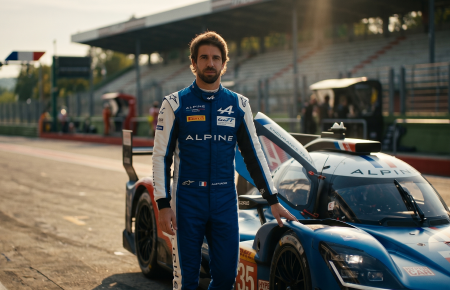
Mick born 1999. Raced F1 with Haas (2021-2022). Was Mercedes reserve (2023-2024). Competed WEC with Alpine (2024-2025). Since 2026 races IndyCar with number 47.
Michael donated millions to charities for decades. Never announced it. German Red Cross and UNESCO confirmed years later. Financed schools in Senegal. Supported reconstruction in Sarajevo.
Was FC Köln fan. Played football regularly. 2008 participated in Clarence Seedorf charity event in Africa. 2009 visited Costa Rica after earthquake and played with local under-20 team.
Had helicopter pilot license. Flew himself between home and European circuits. Gave him more time with family.
Collected helmets. Over 100 custom designs. Many were tributes to dead drivers.
Gave Jean Todt a Ferrari Enzo. Only 400 units made.
Owned properties in Switzerland, Norway and Spain. Family has horse ranches in Texas and Switzerland.
Is Ferrari’s most successful driver. 72 victories. 58 poles. 5 titles. Those records remain intact in 2026.
Senna was his idol. Saw him compete in karting in 1980. Michael was 11. Dedicated his first 1994 title to Senna.
In 2009 almost returned to replace Massa at Ferrari. Neck injury from motorcycle race prevented it. That injury complicated his Mercedes return in 2010.
First professional contract with Willi Weber: from having no 500 marks to earning 2,000 monthly, a car and five-year contract. Rolf cried when Michael told him.
In 2024, Kerpen rejected giving him honorary citizenship. Vote generated fury. Ralf called decision “shameful.”
Last confirmed public appearance: November 2013. Charity event in Germany. One month before accident.
The numbers
308 grands prix. 91 victories. 155 podiums. 68 poles. 77 fastest laps. 7 world titles.
Records he maintains in 2026:
- Most successful Ferrari driver (72 victories)
- 5 consecutive world titles (2000-2004)
- 13 victories in one season (2004)
Records he lost to Hamilton:
- Most total victories
- Most poles
- Most world titles (Hamilton reached 8)
2026: The legend that doesn’t die
Michael Schumacher is 57. Hasn’t appeared publicly for 12 years. His condition is secret. But his impact is undeniable.
Transformed Ferrari. Established new standards. Today’s drivers train like Olympic athletes because Schumacher demonstrated it was necessary.
Generated controversy. Crashed rivals deliberately. Played at the limit of rules and beyond. But nobody doubts he was one of the greatest.
Hamilton, who broke many of his records, said in 2020: “Michael will always be a legend. Established the standard we all follow. Every record I broke was built on what he put down.”
Vettel, in 2024: “Growing up watching him win taught me what being champion meant. Not just speed. Total dedication.”
Todt, in 2023: “Michael wasn’t just the fastest. Was the most complete. Could win with the best car. But also made a car that wasn’t the best win. That’s the mark of greatness.”
The Netflix documentary closed with Corinna saying: “We all miss him as he was. But he taught us family is first. That’s what we do. Take care of him as he took care of us.”
No closure. No happy ending. Only the certainty that the man who gave everything now receives everything from those who love him.
And at karting tracks worldwide, children with red helmets repeat his name. Because some legends don’t die. They just change form.
Sources: Formula1.com, ESPN F1, Sky Sports F1, Motorsport.com, Autosport, The Race, BBC Sport, MotorSport Magazine, Infobae, El Español, Planet F1, RacingNews365, GPFans, Ferrari Official Website, Mercedes-AMG Petronas Official Website, FIA Official Records, Netflix Documentary “Schumacher” (2021), German Red Cross Official Statements, UNESCO Donor Records, FC Köln Official Website, La Repubblica, L’Equipe, Daily Mail, Crash.net, Speedcafe, Read Motorsport, Michael Schumacher Official Archives, Keep Fighting Foundation
No Comment! Be the first one.