


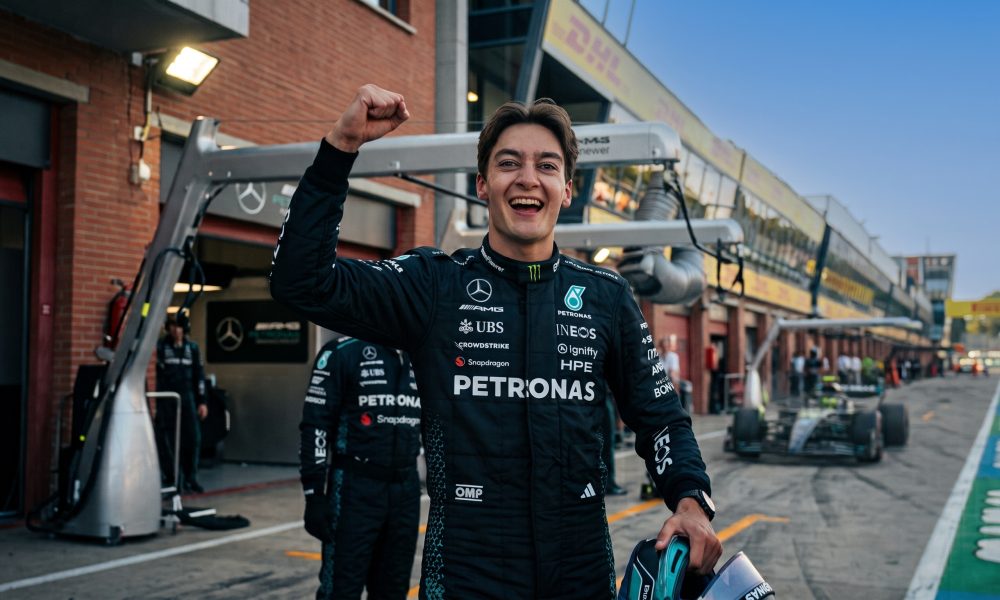
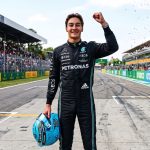
Saturday morning at the Temple of Speed, and once again it’s George Russell setting the tone. FP3 for the 2026 Italian Grand Prix ended with the Briton on top of the timesheet by just 0.226 over Lewis Hamilton, in a session that had a bit of everything: a slipstream chess match between teammates, a Verstappen who got into it with Hamilton on the cooldown lap like it was 2021 again, a spin from Lawson, and Kimi Antonelli showing pace that won’t do him any good on Sunday since he already knows he’s starting last. Let’s break down what this session actually is, how it got to be what it is today, and what this particular edition left behind ahead of this afternoon’s qualifying.
Table Of Content
- What FP3 actually is, and why it matters beyond the engineers
- Monza by the numbers: what you need to know before the afternoon
- The slipstream war
- Incidents came thick and fast
- How the timesheet came together
- The reminder nobody wanted in this session: the penalties
- What this FP3 leaves ahead of qualifying
- Timesheet — FP3, Italian GP 2026 (Monza)
What FP3 actually is, and why it matters beyond the engineers
For anyone new to Formula 1: FP3 is the third and final free practice session of the weekend, run on Saturday morning, lasting one hour, and it’s the last chance teams get to touch the car before parc fermé regulations kick in, the rule that bans setup changes from the end of this session all the way through Sunday’s race.
That parc fermé rule was introduced in 2003, and it completely changed how teams think about the weekend. Before that, teams could keep tweaking the car between qualifying and the race. Since then, every setup decision made in FP3 is locked in, literally, until the lights go out on Sunday. In 2021, another significant change arrived: parc fermé began applying right after this session instead of after qualifying, which gave FP3 extra weight it didn’t carry in previous years.
The three practice format (FP1 Friday morning, FP2 Friday afternoon, FP3 Saturday morning) has existed since 2006, and since 2021 all three sessions last exactly one hour, whereas the Friday sessions used to run 90 minutes. On sprint weekends, this session disappears entirely, leaving only Friday’s FP1 before sprint qualifying. That makes a “real” FP3, in the classic format, more and more of a luxury on the calendar.
Monza by the numbers: what you need to know before the afternoon
Before getting into what happened on track, a few numbers that explain why this race unfolds differently from any other. Autodromo Nazionale Monza measures 5.793 kilometres per lap, the race runs 53 laps for a total distance of 306.72 kilometres, and the average time lost during a pit stop is just 23 seconds, one of the shortest on the calendar. That, combined with the long straights, is what makes Monza the highest average-speed circuit of the entire season.
Pirelli brought its three softest compounds to this race, the C3, C4 and C5, an unusual choice in itself and a statement about how easy this asphalt is on lateral degradation, though not so much on longitudinal wear given how hard the braking zones are. With track temperature sitting at 51 degrees this Saturday, the engineering read points to a one-stop strategy combining mediums and hards for Sunday’s race, though everything is going to depend on how the tyres hold up in this relentless heat.
The slipstream war
If one word sums up this FP3, it’s “tow.” With straights this long, running right behind the car ahead can be worth several free tenths, and that turned the session into a kind of chess match between teammates. Ferrari sent both cars out on softs almost from the start, straight into hot laps, while Mercedes played it differently: Antonelli went out early to set the first reference time, with the plan of later towing Russell on the decisive attempt, notable given that Antonelli already knows he doesn’t need a strong qualifying position since he’s starting from the back on Sunday anyway because of his engine penalty.
Leclerc benefited from a tow off Hamilton on his cooldown lap and climbed to second at that point in the session, leaving a pointed question hanging in the air: how far is Ferrari willing to go in sacrificing one driver to help the other, knowing how strong Mercedes looks here? Over at Williams, Albon towed Sainz with a timing that caught more than a few people off guard, in an attempt to at least get the Spaniard out of Q1. Something similar happened at Alpine, with Colapinto pulling his teammate Gasly along.
Incidents came thick and fast
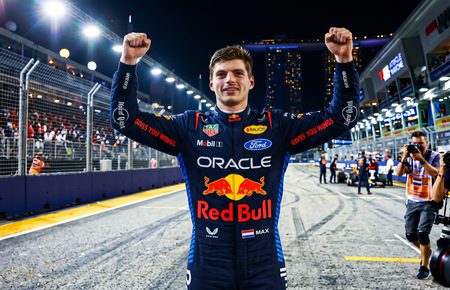
The session wasn’t only about times and strategy. Liam Lawson lost the rear entering the first chicane and spun, picking up small flat spots on his tyres that he was still able to run on. Verstappen had his own moment, running straight on at Turn 1 and having to negotiate his way around the bollards, distracted by a Ferrari ahead of him, which did nothing for his mood. When his team told him he’d put in a good lap in clean air, he made clear he needed the tow to properly judge his pace, since without it the car felt notably slow.
Alex Albon had a scare with his steering just before heading out and had to be wheeled back into the garage for repairs. Sergio Perez ran wide through the Lesmos and dipped a wheel into the gravel, which may have brought loose stones back onto the racing line, never good news for anyone. And right at the end, with the chequered flag already out, Hamilton surprised Verstappen by passing him on the cooldown lap; the Dutchman didn’t take it well, and the two ended up racing wheel to wheel down the main straight, a scene that anyone who’s followed this rivalry over the years immediately linked back to 2021. Thankfully, Verstappen backed off before it turned into anything more.
Oscar Piastri got the worst of the traffic: he had to abort a hot lap after finding Russell driving slowly on the racing line, and later locked up into the first chicane and abandoned that attempt too. Nothing serious in practice, but a preview of how tricky it can get to find a clean gap this afternoon in qualifying, where a similar moment would carry real grid consequences.
How the timesheet came together
With all that noise in the background, Russell ended up on top with a 1:22.219, though the end of his session wasn’t exactly clean either: he got caught dawdling at low speed on the entry to Lesmo just as Piastri came through on a hot lap, a move that would have carried a grid penalty had it happened in qualifying. Hamilton put the Ferrari into second at 0.226 with no tow at all, which says a lot about how much real pace that car is hiding today. Verstappen finished third at 0.350, a Red Bull that’s still searching for the perfect lap at this circuit but can never be fully written off.
Antonelli, despite knowing he starts from the back on Sunday, finished fourth just 0.361 back, showing the pace was there even if it won’t help his starting position at all. Norris ended up fifth, Leclerc sixth, and behind them a tightly packed group where every tenth counted: Lindblad, Piastri, Gasly and Colapinto all squeezed inside a second of the pace. Carlos Sainz, meanwhile, provided the other odd moment of the session, a black and white flag for driving unnecessarily slowly, right in the middle of the traffic that defines these sessions whenever everyone chases the same clear window on track at the same time.
The reminder nobody wanted in this session: the penalties
While all of this was happening on track, the topic of engine penalties kept floating in the background. Antonelli and Albon are already confirmed for back of the grid starts on Sunday due to exceeding their power unit component allowance. Russell, for his part, risks joining that list in one of the coming rounds, most likely Baku, and rumours are still swirling that Lawson could take a grid penalty at this very race. With that hanging over everything, every fast lap from these drivers in FP3 carries a bit of a question mark: how much of it actually matters, and how much is just car-testing when qualifying won’t change their starting spot anyway?
What this FP3 leaves ahead of qualifying
No single practice session ever decides anything, anyone who’s followed this sport for a while already knows that. But it does leave clues. And the clearest one here is that Mercedes and Ferrari head into this afternoon’s qualifying practically shoulder to shoulder, with Russell and Hamilton separated by a quarter of a second, while Red Bull is still there, lurking, without quite landing the blow. McLaren, coming off back to back wins with Norris, looked more discreet in this particular session, a deliberate strategy to hide real pace, or does the car still need fine-tuning on such an unusual circuit?
Timesheet — FP3, Italian GP 2026 (Monza)
| Pos | DRIVER | TEAM | TIME | GAP | LAPS |
|---|---|---|---|---|---|
| 1 | George Russell | Mercedes | 1:22.219 | — | 0 |
| 2 | Lewis Hamilton | Ferrari | 1:22.445 | +0.226 | 7 |
| 3 | Max Verstappen | Red Bull Racing | 1:22.569 | +0.350 | 8 |
| 4 | Kimi Antonelli | Mercedes | 1:22.580 | +0.361 | 0 |
| 5 | Lando Norris | McLaren | 1:22.625 | +0.406 | 7 |
| 6 | Charles Leclerc | Ferrari | 1:22.708 | +0.489 | 4 |
| 7 | Arvid Lindblad | Racing Bulls | 1:22.724 | +0.505 | 4 |
| 8 | Oscar Piastri | McLaren | 1:22.773 | +0.554 | 7 |
| 9 | Pierre Gasly | Alpine | 1:22.898 | +0.679 | 2 |
| 10 | Franco Colapinto | Alpine | 1:23.101 | +0.882 | 2 |
| 11 | Nico Hülkenberg | Audi | 1:23.126 | +0.907 | 1 |
| 12 | Liam Lawson | Red Bull Racing | 1:23.203 | +0.984 | 2 |
| 13 | Gabriel Bortoleto | Audi | 1:23.298 | +1.079 | 1 |
| 14 | Oliver Bearman | Haas | 1:23.585 | +1.366 | 2 |
| 15 | Yuki Tsunoda | Racing Bulls | 1:23.817 | +1.598 | 5 |
| 16 | Carlos Sainz | Williams | 1:23.875 | +1.656 | 2 |
| 17 | Esteban Ocon | Haas | 1:24.020 | +1.801 | 2 |
| 18 | Alexander Albon | Williams | 1:24.437 | +2.218 | 10 |
| 19 | Fernando Alonso | Aston Martin | 1:24.919 | +2.700 | 1 |
| 20 | Valtteri Bottas | Cadillac | 1:25.004 | +2.785 | 3 |
| 21 | Sergio Pérez | Cadillac | 1:25.031 | +2.812 | 0 |
| 22 | Lance Stroll | Aston Martin | 1:25.555 | +3.336 | 6 |
All times set on soft tyres. Laps on tyre indicates how many runs that specific set had completed at the moment the time was set.
Is Mercedes’ margin enough to convert into pole this afternoon, or does Ferrari, racing at home, turn it around exactly when it matters most? Let us know in the comments what you think happens in qualifying, and don’t forget to share this piece on your socials if it left you wanting more ahead of the Monza afternoon.
Sources: Crash.net, Formula1.com, GPFans, Flow Racers, F1 Wiki (Fandom), Pirelli, F1 TV

No Comment! Be the first one.