


New Floor, New Wing and Up to Half a Second of Gain: The Ambitious Update Package Ferrari Tested at Monza on April 22nd
Ferrari at Monza: The Day the SF-26 Received Its First Major Transformation The Autodromo Nazionale di Monza Italy’s cathedral of speed that has witnessed motorsport history for over a century...

Ferrari at Monza: The Day the SF-26 Received Its First Major Transformation
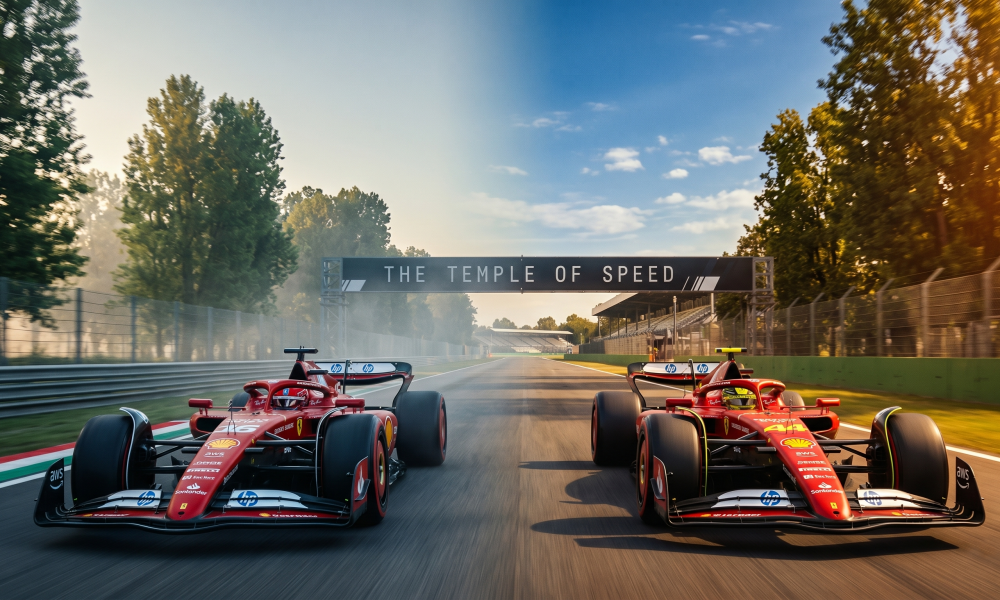
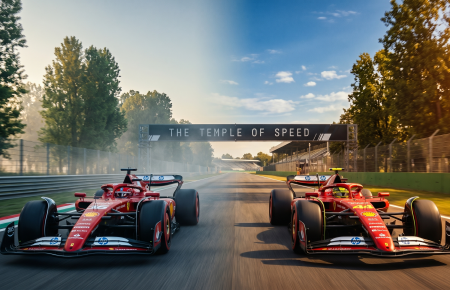
The Autodromo Nazionale di Monza Italy’s cathedral of speed that has witnessed motorsport history for over a century awoke on Wednesday, April 22, 2026, with its gates hermetically sealed. Barriers on access roads, reinforced security, cameras strictly forbidden. Scuderia Ferrari had turned the Temple of Speed into a fortress, and they had very concrete reasons for doing so: the SF-26 that would run that day was not the same car with which Charles Leclerc and Lewis Hamilton had raced in Australia, China and Japan. It was, according to all sources consulted, a significantly evolved version of the red single seater, featuring updates that could be worth tenths of a second and were destined to make their debut at the Miami Grand Prix.
Since the start of the 2026 season, Ferrari had shown encouraging signs but insufficient pace to challenge a Mercedes that was operating at a different level. The new technical regulations era had arrived with promises for the Scuderia a competitive chassis and a power unit that even rivals acknowledged as solid but with a gap of around half a second per lap to the Silver Arrows in qualifying that still hung over Maranello like the Sword of Damocles. The SF-26 needed to evolve, and the Monza filming day was the first step in that evolution.
The work programme for the day was exhaustive. Charles Leclerc was the first behind the wheel during the morning, tasked with debuting the new components on actual tarmac. With Ferrari’s engineers monitoring every parameter in real time from the garage, Leclerc completed laps in an SF-26 loaded with technical novelties that in some cases had been in the wind tunnel weeks earlier. Lewis Hamilton took over for the afternoon, contributing his own technical feedback from the experience accumulated over two decades in Formula 1. The decision to use both race drivers something not always done in filming days responded to a very clear logic: comparing two radically different driving styles to maximise understanding of the new components.
The most anticipated element of the package was the new floor concept. The Monza circuit, with its long straights and the abrupt braking chicanes that interrupt them, is not the typical venue for testing a Formula 1 floor, which usually generates more benefit at circuits with slow and medium-speed corners. However, the choice was deliberate: Ferrari wanted data on how the new floor affected electrical energy management on a high power demand circuit a critical variable under the 2026 regulations where the electrical component accounts for 50% of total power output. Engineers needed to know whether the new floor generated flow disruptions that could affect brake temperatures under Monza braking events, and whether its aerodynamic efficiency scaled correctly with speed.
The second major development was the new front wing specification. Without changes to the nose structure, the new wing incorporates modifications to its profile and the geometry of its elements, seeking to optimise the distribution of aerodynamic load between the front axle and the floor zone. An apparently minor modification but with balance consequences that the drivers would feel immediately from the cockpit.
And then there was the “Macarena” rear wing that singular concept Ferrari had briefly introduced in China before shelving it, now returning manufactured entirely in carbon laminate to comply scrupulously with FIA regulations. The “Macarena” nickname refers to the specific movements of its active components, and it is a solution Maranello’s engineers consider particularly promising for optimising variable aerodynamic drag as a function of speed. At Monza, combined with the energy management system Ferrari was working on in parallel, it could have very significant impact.
Added to all these novelties was a detail that speaks to the level of precision Formula 1 teams operate at in 2026: a revised engine cover to improve thermal efficiency and allow the power unit to “breathe” better under maximum demand conditions. And an ambitious weight reduction objective that, if achieved, would give the team additional margin to optimise ballast distribution throughout the season.
The most optimistic technical estimates placed the total package gain in a range of three to five tenths of a second per lap. A figure that, in the context of the 2026 championship where Mercedes had dominated the opening three Grands Prix, could transform the SF-26 from a competitive single-seater into a genuine championship contender.
The choice of Monza was not arbitrary. The Autodromo Nazionale offers the ideal high speed environment to evaluate aerodynamic updates destined for high-power demand circuits like Miami, Abu Dhabi or Baku. But Monza also has a symbolic value for Ferrari that no other circuit can match: it is the home circuit, the place where the Tifosi roar and where every hundredth of a second gained tastes like a victory. That the updated SF-26 ran for the first time at Monza was not purely a technical decision. It was also a statement of intent.
By the end of the day, both drivers and the entire technical staff relocated to the Maranello simulator to begin correlating the real world data with the virtual models. If the numbers aligned, the complete package would be on a plane bound for Miami within days. If not, there would be analysis, adjustments and difficult decisions about what to bring and what to leave in the laboratory.
One thing was clear as the evening fell on April 22 in Monza: Ferrari had moved into action. The SF-26 that left that filming day carried inscribed in its carbon the determination of a team that has not given up on fighting for the title. And Lewis Hamilton who in 2025 did not reach the podium a single time had for the first time in 2026 something genuinely worth dreaming about.
CHRONOLOGY
- January 2026 — Ferrari presents the SF-26 at its official launch. Hamilton and Leclerc conduct a shakedown at Fiorano, officially classified as a “demonstration event”.
- February 2026 — Pre-season testing in Barcelona and Bahrain. Ferrari presents itself as a solid candidate under the new regulations.
- March 2026 — Australia (Race 1) — Leclerc and Hamilton compete but Mercedes dominates. Ferrari shows speed but cannot match the Silver Arrows.
- March 2026 — China (Race 2) — Leclerc delivers a solid result. Hamilton scores points. The qualifying gap to Mercedes remains ~0.5 seconds.
- March 2026 — Japan (Race 3) — Leclerc achieves a memorable battery victory over Hamilton and Russell. Ferrari begins to show growing competitiveness.
- Early April 2026 — Ferrari conducts a TPC test at Mugello and another at Fiorano for Pirelli. The Miami update package is prepared.
- April 22, 2026 — Filming day at Monza. Leclerc in the morning, Hamilton in the afternoon. New components: evolved floor, new front wing, carbon “Macarena” rear wing, revised engine cover, weight reduction.
- Post-filming day — Simulator work at Maranello for data correlation.
- Next — Miami GP — Planned destination for the complete package if correlation is positive.
IMPORTANT PHRASES
“The goal of the Monza day is clear: validate the updates for Miami and make sure the path we have chosen is correct.” — Ferrari internal sources quoted by AutoRacer.it.
“Having Leclerc and Hamilton alternating at the wheel will allow us to compare two very different driving styles and obtain the most complete feedback possible.” — Ferrari team sources, quoted by PaddockNews24.
“Expectations are high, yet the approach remains cautious.” — PaddockNews24, describing Ferrari’s official stance ahead of the filming day.
CURIOSITIES
- Ferrari deliberately chose Monza for its high-speed profile, ideal for evaluating the SF-26’s electrical energy management under the 2026 regulations where the electrical component contributes 50% of total power output.
- The rear wing nicknamed “Macarena” was first introduced in China, then shelved for non compliance with FIA regulations in its original version, and returned at Monza manufactured entirely in carbon to be fully legal.
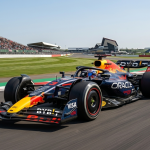
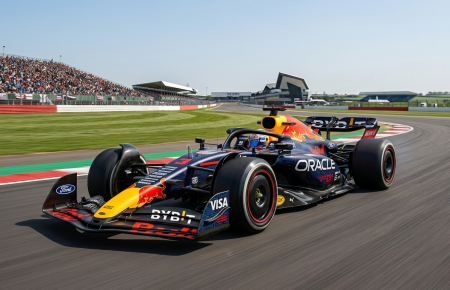
- Ferrari’s filming day at Monza and Red Bull’s at Silverstone coincided on the same date: April 22, 2026. Two of the most famous teams in F1 testing updates simultaneously on the same day is virtually unprecedented.
- According to Corriere della Sera, Mercedes, McLaren and Red Bull are also preparing significant updates for Miami, confirming that the season development race is already in full swing.
- The estimated performance gain from the complete SF-26 update package could reach up to five tenths of a second per lap, according to technical sources.
- Ferrari had access to only 200 km of regulated running during the filming day an extremely limited figure that makes every single lap enormously valuable from a data collection perspective.
Will the upgrade package tested at Monza be the weapon Hamilton and Leclerc need to seriously challenge Mercedes in the second half of the 2026 season, or will Miami reveal that the gap to the Silver Arrows is still too wide? Leave your prediction in the comments, because the answer is coming very soon.
Sources: GPBlog.com, ScuderiaFans.com, PlanetF1.com, PaddockNews24.com, The-Race.com, AutoRacer.it, Wikipedia, Silverstone.co.uk, RaceFans.net
No Comment! Be the first one.