Bahrain International Circuit
- The Bahrain International Circuit was designed by renowned German engineer Hermann Tilke and cost approx. $150 million.
- Construction began in October 2002 and was completed in less than 18 months, with the keys to the circuit being handed over in just 496 days on March 17, 2004, despite being initially scheduled to take two years.
- Opened in April 2004, it hosted the first Formula 1 Grand Prix in the Middle East, a historic event in international motorsports.
- Being located in the desert, a key concern was sand. Organizers solved this problem by spraying a special adhesive on the sand around the track to prevent it from blowing onto the racing surface.
- In 2007, the circuit was the first to receive the prestigious FIA Institute Center of Excellence award for its outstanding safety and medical facilities. It also features multiple track configurations (up to six) that allow it to host a variety of motorsport events.
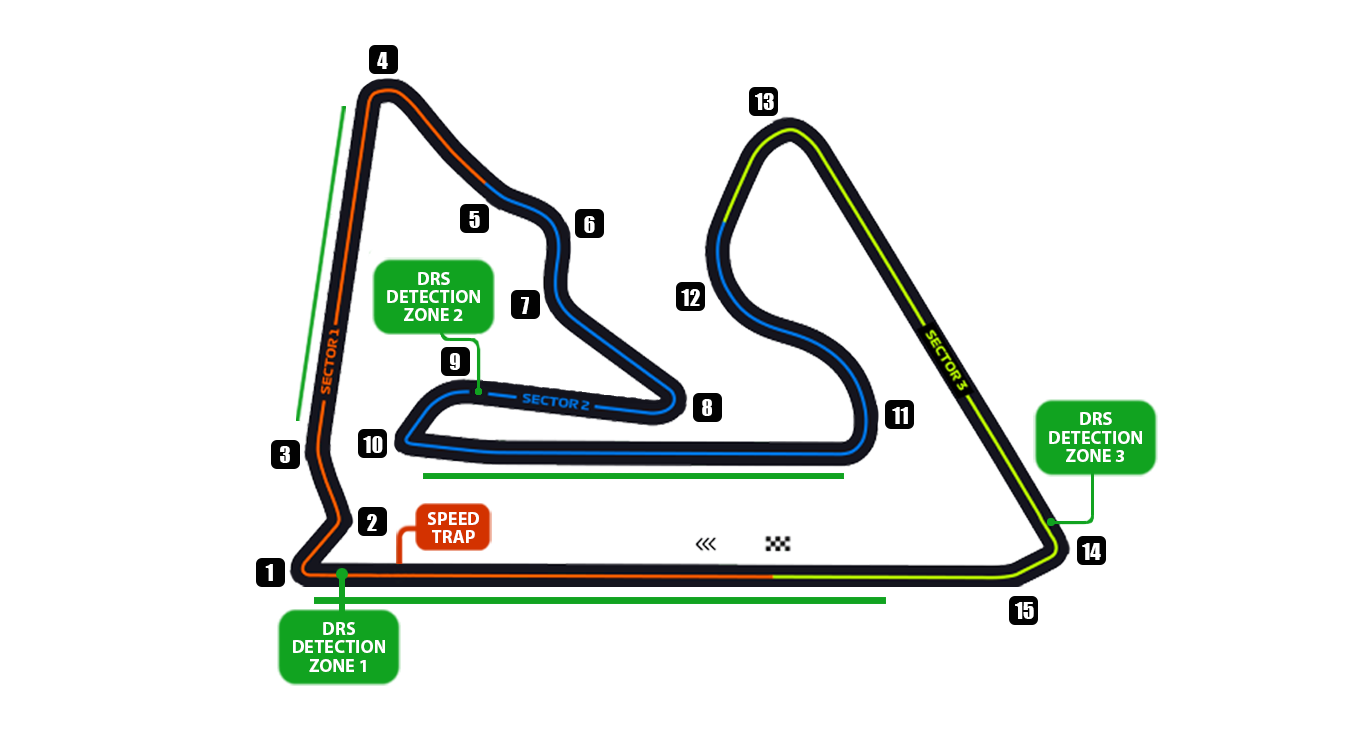
- Its design combines high-speed sections with technical zones and tight corners, challenging drivers and encouraging overtaking.
- The circuit is extremely versatile, offering six different track configurations. The most well-known for Formula 1 is the 5.412-kilometer Grand Prix layout, and the longer "Endurance Track" and other layouts for different motorsport categories.
- It is known for its heavy braking zones, especially at the end of the long straights. This makes it a demanding circuit for vehicle brakes and offers key opportunities for overtaking.
- With wide paved escape routes. This gives drivers a safety margin in case of mistakes and makes it easier to rejoin the road.
- Since 2014, the Bahrain Grand Prix has been held under floodlights, making it a night race. This required the installation of a state-of-the-art lighting system that transforms the aesthetics of the circuit and adds a unique visual challenge for drivers and teams.
- It was built on desert sand, posing an engineering challenge to ensure a stable base for the runway and its facilities.
- Given its desert location, sand is a constant challenge. To mitigate this, the circuit uses a special adhesive sprayed on the areas surrounding the track to prevent sand from being blown onto the racing surface.
- Sakhir is a circuit that places significant demands on car brakes due to its numerous heavy braking zones at the end of the long straights. Teams must optimize brake cooling to prevent overheating.
- In addition to hosting the Grand Prix, the Sakhir Circuit has become a regular venue for Formula 1 pre-season testing due to its stable climate and first-class facilities, allowing teams to properly prepare before the start of the season.
- Sakhir is a regular stop on the FIA World Endurance Championship (WEC) calendar, hosting long-distance races that test car reliability and team strategy, often under the heat of day and night.
























 ?? : UNKNOWN
 ?? : UNKNOWN
 ?? : UNKNOWN