


From Formula 1 to California Asphalt: How Mick Schumacher Is Writing His Own Story at Rahal Letterman Lanigan Racing
Mick Schumacher in Long Beach: A Learning Story That Is Starting to Make Sense There are names that arrive in the paddock carrying more weight than any helmet can hold. Mick Schumacher did not choose...
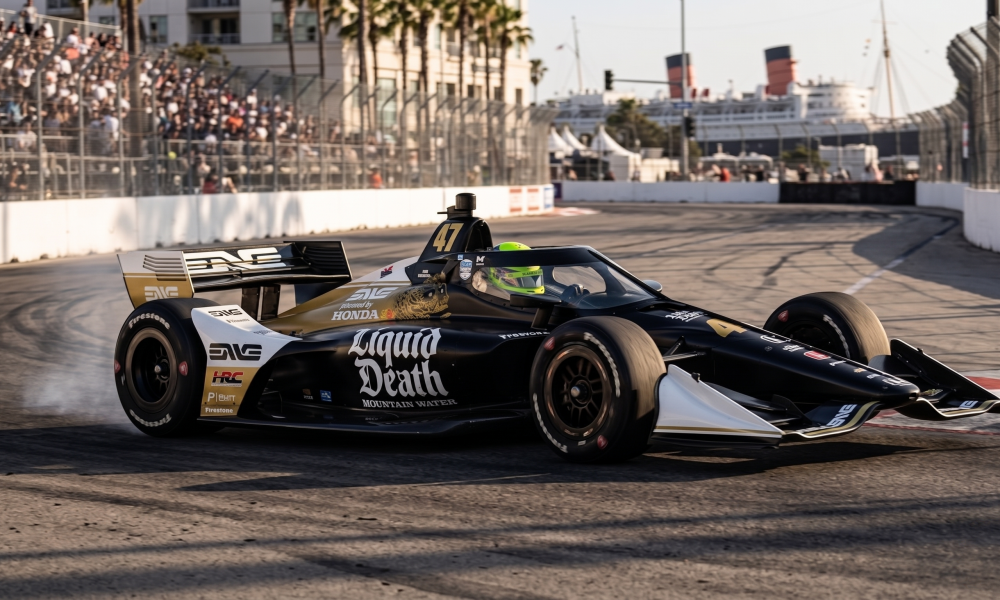
Mick Schumacher in Long Beach: A Learning Story That Is Starting to Make Sense
There are names that arrive in the paddock carrying more weight than any helmet can hold. Mick Schumacher did not choose his surname, but he has chosen how to carry it. And on the streets of Long Beach, California, on April 19, 2026, the 26 year old Rahal Letterman Lanigan Racing driver crossed the finish line in 17th position his best result of the season to that point after a weekend that tested him from the very first minute.
To understand what that 17th place truly means, you have to go back. You have to return to March 1 in St. Petersburg, where a first lap collision caused by Sting Ray Robb of Juncos Hollinger Racing ended his race before it really began. You have to remember Phoenix, where he qualified fourth in his very first oval race in history a performance that left even the most experienced team members speechless only to have a wheel gun failure during his pit stop cost him two full laps despite running in sixth place just before his stop. You have to pass through Arlington, Texas, where a drive through penalty derailed what was shaping up to be his strongest result, and then Barber Motorsports Park, where he finished 24th in a race that offered him no room to breathe.
Those are the numbers the skeptics cite. But numbers only tell half the story.
Long Beach: The Most Demanding Circuit on the Calendar
Long Beach is not just a race. It is a public examination. Shoreline Drive as the main straight, 11 corners winding between the Convention Center and the harbor waterfront, concrete walls that leave zero margin for error, and 25 drivers compressed into 1.968 miles of urban asphalt. They call it the Monaco of IndyCar, and that comparison is not poetic it is technical.
For Mick Schumacher, Long Beach was entirely new ground. A circuit he had never seen, in a category where he had fewer than five starts to his name. Friday’s practice sessions made that clear immediately: the No. 47 stopped at the exit of the fountain section, at Turn 3, during the first free practice. Schumacher asked his team whether he should try to restart the car. The answer was no. He stayed put. He ended that session last, with just three laps completed before a second red flag, caused by track debris, ended the session early.
It would be easy to stay with that image. It would also be deeply unfair.
The second practice session on Saturday afternoon was a different story. Mick came to the circuit having invested time in a full track walk alongside teammate Graham Rahal, the two RLL drivers walking every corner of the 11-turn layout on foot, analyzing braking points, racing lines, and the specific characteristics of each turn. For Schumacher, it was his first time ever standing on that particular stretch of asphalt in any form. It was the kind of preparation that does not make headlines but speaks volumes about the seriousness he brings to every race weekend.
In qualifying, the new single-lap format introduced for street circuit events this season placed him in front of a clean sheet: one lap, no second chance, no reference points from which to improve. He qualified in the mid-to-lower group, far from the front row claimed by Felix Rosenqvist with a stunning 1m07.4635s, but with a time that did not embarrass him in the context of a field as competitive as the 2026 IndyCar Series.
The Race: 90 Laps, a Result That Changes the Narrative
The green flag fell at 5:30 PM ET on Sunday, April 19, with the California sun already dropping toward the Pacific horizon. Rosenqvist, from pole in the No. 60 Meyer Shank Racing Honda, led away cleanly. Behind, the usual compression of a street circuit start. Mick got away cleanly, steered clear of early incidents, and began to work in silence.
Over the course of 90 laps, the No. 47 moved steadily forward. Without headline moves, without spectacular overtakes that dominate television coverage, but with lap-time consistency and tire management that began to offer glimpses of what this driver can be when circumstances align. He crossed the line 17th, 36.9 seconds behind race winner Alex Palou, but ahead of Santino Ferrucci, Will Power, Christian Lundgaard, Romain Grosjean, Caio Collet, Sting Ray Robb, and Marcus Armstrong.
The most significant element was the context: Schumacher completed the full race distance, finished as the second rookie behind Dennis Hauger in 11th, and moved off the very bottom of the championship standings, climbing ahead of Robb with five rounds completed.
Graham Rahal, his more experienced teammate, finished eighth. RLL left Long Beach with two cars inside the top ten a clear sign that the team co owned by Bobby Rahal, David Letterman, and Mike Lanigan is operating at a higher level than in recent seasons.
Full Career Timeline: From Kerpen to Long Beach
Mick Schumacher was born on March 22, 1999, in Vufflens le Château, Switzerland, but grew up in Kerpen, Germany the same city where his father, seven-time Formula 1 World Champion Michael Schumacher, began his journey in karting. The Kerpen circuit was the first piece of asphalt Mick ever drove on. It could not have been any other way.
In 2016-17 he competed in the MRF Challenge Championship, finishing third. In 2018 he stepped up to the FIA Formula 3 European Championship with Prema and won it convincingly. Moving to Formula 2 in 2019, he took the title in 2020 with Prema following a line of champions that includes Nico Hulkenberg, Romain Grosjean, Charles Leclerc, and George Russell.
He joined the Ferrari Driver Academy in 2019, participated in rookie testing with Alfa Romeo and Haas in 2020, and made his full Formula 1 debut with the Haas F1 Team in 2021 alongside Nikita Mazepin. Two seasons in an uncompetitive car gave the world a driver of obvious natural talent who was simply not given the tools to fight. His best F1 result across 43 starts was sixth place at the 2022 Austrian Grand Prix.
When Haas released him at the end of 2022, Schumacher became a reserve driver for Mercedes-AMG in 2023 and 2024, maintaining fitness and paddock presence without a race seat. Simultaneously, in 2024, he joined Alpine’s factory FIA World Endurance Championship program, where he finished on the podium at the 6 Hours of Fuji. In 2025, he added two more podiums at Imola and Spa Francorchamps.
On October 13, 2025, the decisive moment arrived: Mick Schumacher tested an IndyCar for the first time at the Indianapolis Motor Speedway road course with Rahal Letterman Lanigan Racing. The test was a success by every measure. Forty-nine days later, on November 24, 2025, RLL officially announced his signing for the full 2026 season, driving the No. 47 Honda.
The number 47 was not an accident. It was his third choice. His first preference, No. 4, was taken by AJ Foyt Racing for Caio Collet. His second choice, No. 7 in honor of his father’s seven world championships belonged to Arrow McLaren for Christian Lundgaard. Combining the two numbers was Mick’s solution. The 47 is, in essence, the most elegant tribute he could have designed.
What Comes Next: Indianapolis and the Big Oval Test
The next major chapter for Mick Schumacher has a specific address: the Indianapolis Motor Speedway. On May 9, IndyCar returns to the IMS road course for the Sonsio Grand Prix. Three days earlier, on Tuesday April 28 and Wednesday April 29, the open Indy 500 test sessions take place on the 2.5-mile oval, and Schumacher will be among the drivers on track.
The Indianapolis 500, scheduled for May 24, will be his first superspeedway start. An event with 110 editions of history, where straightaway speeds exceed 230 mph and where the margin for error is essentially zero. For a driver who had never sat in an IndyCar just six months ago, that moment represents the ultimate examination.
But what Long Beach showed is that Mick Schumacher is not here on a brief visit. He is learning, improving, and above all, building the technical vocabulary and confidence that will allow him to attack the second half of the season with real arguments. The 17th place finish on the streets of California is not a destination. It is, in all likelihood, the beginning of the road to where this driver is actually capable of going.
The Schumacher name is not inherited. It is earned. And lap by lap, Mick is earning his.
Do you believe Long Beach marks a before and after in Mick Schumacher’s 2026 season, or is there still a long way to go before the No. 47 regularly fights inside the top ten? Share your opinion in the comments.
Sources: indycar.com, rahal.com, motorsport.com, motorsportweek.com, readmotorsport.com, racer.com, beyondtheflag.com, si.com, pitdebrief.com, espanol.motorsport.com, racetrackmasters.com
No Comment! Be the first one.